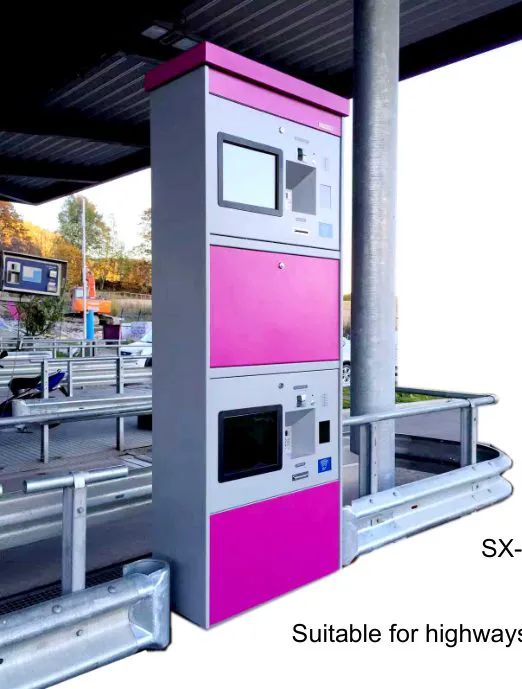
Ask for one quotation that covers the gate, the loop detector, the licence-plate camera and, where you need it, the payment terminal. Buying the lane as one package from a single factory makes spec matching easier and leaves you with one point of warranty instead of four.
In this guide
- Why barrier gates are quoted per project
- What drives an automatic barrier gate price
- Motor and drive type: AC or brushless DC
- Boom length, opening speed and lane throughput
- Duty cycle and lifetime cost
- Accessories and integration
- How to estimate your budget in four steps
- The payment side of the lane
Table of Contents
Why barrier gates are quoted per project

A barrier gate looks like a simple product — a cabinet and a boom — but the cabinet is usually the cheapest part of the decision. Two quotations for the same lane width can be far apart, because behind the painted housing sit different motors, different spring and gear assemblies, different control boards and a different accessory list. That is why our factory prices a barrier gate on request: the specification has to be fixed first.
For buyers comparing automatic barrier gate prices, the useful question is therefore not “what does a gate cost?” but “what is in this quotation, and does my lane need it?” The rest of this page walks through the seven items that actually move the number, and the specifications we publish for each of them.
What drives an automatic barrier gate price
This is the short version — the factors in order of how much they usually move a quotation, with the specification each one maps to on this site:
| Factor | What it changes | Reference specification |
| Drive / motor type | Motor class, power draw and cycle life | AC motor gate 140 W / 250 W; brushless DC gate 100 W |
| Boom length and boom type | Spring and gearing loads, counterweight, cabinet size | Straight boom up to 6 m, two-rail fence 5.5 m, three-rail fence 4.5 m |
| Opening and closing speed | Motor technology — standard drive or servo | Standard gates 3–6 s adjustable; AC gate from 1.2 s; servo high-speed gate 0.3–1 s at 480 W |
| Duty cycle (vehicles per day) | Motor class, cooling, service intervals | Intelligent series MCBF 5,000,000+; brushless DC rated over 1,000,000 cycles; servo high-speed over 10 million cycles |
| Environment | Ingress protection, coatings, temperature range | IP54; −35 °C to +75 °C (brushless DC); −30 °C to +75 °C (AC / servo) |
| Trigger and integration | Loop detectors, LPR, RFID, remote controls, intercom | 433.92 MHz receivers; remote control range 40–50 m |
| Quantity and shipping | Unit price at volume, freight per unit | Mixed container loads (gates + bollards + LPR) usually ship better than a single unit |
Everything in that table is a factory-direct figure from our own series specifications — not a market estimate. When we quote, we quote against those tables.
Motor and drive type: AC or brushless DC
This is the single biggest line in most quotations, and it is where cheap and expensive specifications part company.
- AC motor gates — the workhorse for housing estates, office car parks and low-to-medium traffic lanes. Our AC motor barrier gate runs a 140 W motor with an optional speed setting of 1.2–6 seconds.
- Brushless DC gates — the commercial choice. Our brushless DC model uses a 100 W motor with a 3–6 second adjustable speed, and the series is rated for over 1,000,000 operating cycles — enough for more than ten years of commercial use at 300 cycles a day. Compared with an AC motor, brushless DC drives are more efficient, run cooler and deliver roughly two to three times the operating cycles.
- Servo high-speed gates — for lanes where queueing costs money. The servo series opens in 0.3–1 second (speed depends on boom length) and is rated for over 10 million cycles, with a 480 W, 24 VDC drive, IP54 protection and a −30 °C to +75 °C working range.
The motor you need follows from the lane, not from the price list: a 60-vehicle-a-day residential entrance and a toll lane are two different machines. See our DC vs AC barrier gate comparison for the duty-cycle arithmetic, and the intelligent barrier gate series for the full model-by-model specifications.
Boom length, opening speed and lane throughput
Boom length is a cost item because it sets the load on the drive. Longer booms need more torque and stronger springs, and past a certain span the manufacturer has to move to a different boom construction:
- Our AC motor gate is specified for a 6 m straight boom, a 5.5 m two-rail fence boom or a 4.5 m three-rail fence boom.
- Our brushless DC gate is specified for a straight boom of up to 6 m or a 5 m fence boom.
- Heavy-duty AC models take a boom of up to 7 m.
Which model carries which length — drive, opening time and arm type in the same row — is set out in the boom barrier arm length and model matrix.
Speed and throughput go together. Standard gates run at 3–6 seconds per movement, which comfortably covers car parks and gated communities. Where the lane has to keep moving — toll booths, logistics parks, busy entries at peak hour — a servo gate at 0.3–1 second is rated for 1,500+ vehicles per hour. If you tell us the peak vehicles per hour rather than the daily total, we can size the speed class for you. Our boom length selection guide covers the geometry (lane width, clearance, cabinet position) in detail.
Duty cycle and lifetime cost
The purchase price is only the first number. What the gate costs you over ten years is the purchase price plus spares plus downtime, and that is where the motor class decides the answer:
- Our intelligent series is published with an MCBF of 5,000,000+ movements.
- Brushless DC gates are rated over 1,000,000 cycles; a gate used at 300 cycles a day reaches that figure in roughly ten years of commercial service.
- Servo high-speed gates are rated over 10 million cycles for the toll-lane duty they are built for.
A cheaper AC gate on a 2,000-cycle-a-day lane is not a saving — it is a service contract waiting to happen. Our high-speed barrier gate guide and components guide explain which parts normally limit the service life.
Accessories and integration
Accessories are the fastest-moving part of a quotation, because they are chosen per site:
- Detection — inductive loop detectors, radar or infrared anti-smash protection (the servo series ships with infrared radar and ground-loop protection against hitting a vehicle).
- Triggering — remote controls (433.92 MHz, range 40–50 m), push buttons, keypads, RFID or long-range readers.
- Identification — licence plate recognition (LPR/ANPR) for hands-free entry and exit, with the camera and the gate sharing one trigger.
- Payment — self-service payment machines for unattended lots, where the gate opens on a paid ticket or a plate match.
- Traffic control — LED traffic lights on the cabinet, lane signs and audible warnings.
- Branding — OEM housing colour, logo and advertising booms (see our OEM guide).
Add-ons are where two otherwise identical quotations diverge, so compare them line by line rather than on the headline figure.
How to estimate your budget in four steps
- Measure the lane — clear opening width and the position of the cabinet decide the boom length (up to 6 m straight, 5.5 m two-rail, 4.5 m three-rail on our AC gate).
- Count the vehicles — peak vehicles per hour sets the speed class; vehicles per day sets the motor class and the cycle rating you should be buying (1,000,000+ for brushless DC, 10 million+ for servo).
- Describe the site — outdoor exposure, temperature range, power supply available, and whether the lane must run unattended.
- List the hardware you want on the lane — detection, triggering, LPR, payment, signage — so it can be quoted as one system instead of four separate purchases.
Once those four items are on paper, we can price a configuration instead of a guess. Send them with your destination port and quantity, and we will reply with a written factory-direct quotation — pricing is on request, because it is configuration-specific.
The payment side of the lane
This page covers the gate itself. If your question is about collecting money at the exit — pay stations, ticket machines, pay-by-plate, cash or card handling — that is a different product family with its own specification logic, and it is covered in our parking payment kiosk guide. Most automated lots end up needing both: the kiosk takes the payment and the barrier gate (often with LPR) opens on the transaction. Read the kiosk guide for the payment side, then come back here for the gate.
FAQ
How much does an automatic barrier gate cost?
It is quoted per project rather than from a fixed price list: factory-direct pricing is on request, and the figure depends on drive type, boom length, opening speed, duty cycle, accessories and quantity. Send us the lane width, the vehicles per day and the way the gate should be triggered, and we will return a written quotation for that configuration.
Why can two barrier gate quotes for the same lane differ so much?
Usually because they are not the same machine. A 140 W AC gate with a 6 m boom for a low-traffic residential entrance and a 480 W servo gate opening in 0.3–1 second for a toll lane share a silhouette but almost nothing else — different motor, springs, control board, cycle rating and accessory list.
Is a brushless DC gate more expensive than an AC gate?
The brushless DC unit carries the higher unit price, but it is rated for over 1,000,000 cycles and delivers roughly two to three times the operating cycles of an AC motor, so on a busy lane the cost per cycle is lower. On a low-traffic lane the AC gate is usually the sensible buy.
Does boom length change the price?
Yes. Longer booms need more torque and stronger springs, and the specified boom type changes with the span — for example a 6 m straight boom, a 5.5 m two-rail fence boom or a 4.5 m three-rail fence boom on our AC gate, and up to a 6 m straight or 5 m fence boom on our brushless DC gate.
What information do you need to give an exact price?
Lane width, peak vehicles per hour and vehicles per day, how the gate should be triggered (remote, loop, LPR, ticket or payment), site conditions including power supply and temperature range, the accessories you want, the quantity and the destination port.
Conclusion
There is no single price for an automatic barrier gate, and any page that gives you one is quoting a machine you have not specified. Fix the four variables that matter — lane width, traffic, site conditions and the hardware you want on the lane — and the quotation becomes comparable. Send us your lane details and our engineers will recommend the right model and price it factory-direct, on request.