In this guide
- What Is a Parking Payment Kiosk?
- How It Works
- Why Parking Lots Need Pay Stations
- Features to Compare
- Pay-on-foot, pay-by-plate or pay-at-exit?
Need a parking kiosk? Compare models SX-P01 to SX-P06 on the parking payment kiosk product page, or see the full parking kiosk machine specification and options.
Size your car park in five answers
The recommendation updates as you type and is based on the barrier gates, LPR cameras, payment kiosks, pedestrian gates and bollards we build.
Table of Contents
What Is a Parking Payment Kiosk?
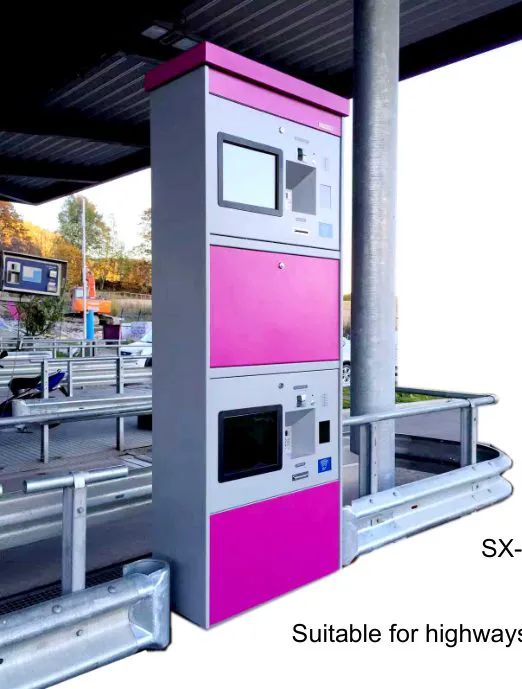
A parking payment kiosk (also called a pay station or parking ticket machine) is a self-service terminal where drivers pay for parking—by plate number, session, or ticket—using cash, coins, cards, or mobile wallets. The parking self-service payment series covers compact pay stations, wall-mounted payment machines, and kiosks with large touch displays for every lot size.
How It Works
Modern pay stations follow a simple flow:
- The driver enters their license plate number (or takes a ticket) and selects a duration.
- The kiosk calculates the fee, including hourly rates, daily caps, and early-bird discounts.
- Payment is collected via coins, banknotes, credit/debit card, or a QR code for mobile payment.
- A digital receipt is issued—no paper needed when payment is linked to the plate.
Because payment is tied to the plate, enforcement officers can check paid status with a handheld scanner, and the system can be integrated with LPR cameras for automatic exit at the barrier.
Why Parking Lots Need Pay Stations
- Cut labor costs — one kiosk replaces a full-time cashier booth
- 24/7 operation — unattended payment around the clock
- Fraud reduction — no cash drawers to rob, every transaction logged
- Flexible pricing — change rates, discounts, and promotions remotely
- Better data — occupancy and revenue reports per hour/day
Which features should you compare?
| Feature | Why It Matters |
| Payment methods | Coin + card + QR mobile covers all user types |
| Plate lookup | Pay-by-plate avoids ticket loss and speeds up enforcement |
| Sunlight-readable screen | Outdoor kiosks need high-brightness displays |
| Tamper protection | Reinforced cash box and anti-theft design for unattended sites |
| Remote management | Web dashboard for rates, reports, and diagnostics |
| Payment integration | Works with barrier gates and LPR for a full automated lane |
Pay-on-foot, pay-by-plate or pay-at-exit? The four kiosk roles in one car park
“Parking payment kiosk” covers four different jobs, and most car parks need more than one of them. Deciding which roles your site needs — before comparing models — is what keeps the exit lane moving at peak hour.
| Kiosk role | Where it sits | What the driver does there | Best suited to |
| Entry ticket / plate station | Entry lane, before the barrier | Presses for a ticket or enters the plate to open a parking session; in a pay-on-entry scheme the fee is taken here | Gated car parks where the fee depends on duration and the entry has to stay fast |
| Pay-on-foot station (central pay station) | Lobby, lift core or pedestrian route inside the building | Pays after the visit, before returning to the car | Malls and offices: it takes payment out of the exit lane, which is where the queue forms |
| Pay-by-plate kiosk (pay-and-display) | On the street or across the surface lot | Enters the plate and buys time; nothing has to be displayed in the car | Open lots and on-street zones with no barrier, where enforcement reads the plate |
| Exit station (pay-at-exit) | Exit lane, at the barrier | Pays the outstanding balance by cash, card or mobile and the barrier opens | Sites with a single exit and no practical place for a payment trip inside the building |
Two combinations cover most projects. A gated car park pairs an entry station with a pay-on-foot station and leaves the exit lane barrier-only, opened by LPR — the layout that keeps a large mall garage flowing. An ungated lot or on-street zone uses pay-by-plate kiosks on their own, with handheld terminals or a patrol vehicle reading plates for enforcement. Whichever you choose, the kiosk must hand a clean record to the rest of the system: plate or ticket number, session start and end, amount paid and a receipt reference. Ask how that record reaches the barrier controller before you start comparing enclosures and screens — it is the part that decides whether the exit lane runs itself.
The parking self-service payment series lists the models we build for each role, and the LPR barrier integration guide explains how a payment record opens the exit barrier with no ticket in the lane.
The pay station this guide describes
Cash, card and QRParking payment kiosk specifications (factory data)
The figures below come from our own data sheet for the SX-P01 to SX-P06 parking payment machine range. Model, payment mix and communication are fixed per project, so what is standard in one car park is an option in the next — we confirm the configuration against your lane layout. The series itself is described under parking self-service payment.
| Model range | SX-P01, SX-P02, SX-P03, SX-P04, SX-P05, SX-P06 |
| Payment methods | Cash (coins and banknotes), bank and credit cards, contactless cards and phones, QR / mobile payment |
| Change giving | Coin and banknote recycling with automatic change dispenser |
| LPR integration | Integrates with LPR / ANPR cameras for ticketless, plate-based parking sessions |
| Interface | Touch screen with multi-language interface and receipt printing |
| Enclosure | Anti-vandal steel housing with secure cash safe and real-time monitoring |
| Ingress protection | Outdoor cabinet typically IP54; indoor models available |
| Operating temperature | Typically −20 °C to +55 °C |
| Power supply | 110 V / 220 V AC, 50/60 Hz, model dependent |
| Communication | Ethernet and 4G, model dependent; cloud-based remote monitoring |
| Management | Web dashboard for device status, cash levels and transaction reports |
| Options | Intercom, CCTV, barrier gate and LPR bundling, OEM branding |
These values come from our own parking payment machine data sheet. Model, payment set and communication are confirmed per order — tell us the lane count, the payment mix and whether you need LPR and we will confirm the model.
Conclusion
A parking payment kiosk turns a manned lot into a 24/7 automated facility: lower costs, fewer disputes, and better data. Match the kiosk to your payment mix and site environment, and integrate it with barrier gates and LPR cameras for a completely hands-free lane. Send us your lot details and we'll recommend the right pay station setup.