Table of Contents
Why Integrate LPR with Barrier Gates?
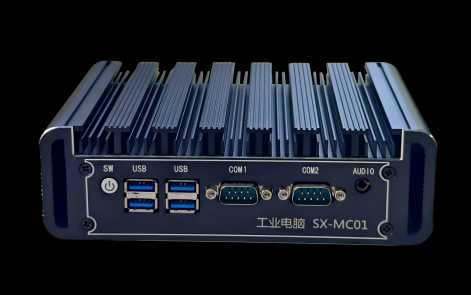
License Plate Recognition (LPR), also known as ANPR (Automatic Number Plate Recognition), is the most common trigger mechanism for modern automatic barrier gates. Integration eliminates the need for RFID tags, remote controls, or manual operation — the barrier automatically opens when an authorized plate is detected.
A properly integrated LPR-to-barrier-gate system provides: hands-free vehicle access, audit trail logging (plate + timestamp + photo), reduced manpower costs, and compatibility with parking fee calculation systems.
Three Integration Methods
Method 1: Relay Output (Dry Contact)
Simplest and most reliable method. The LPR controller has a relay output (NO/COM) that closes momentarily when an authorized plate is recognized. This relay closure triggers the barrier gate's "open" input.
Steps:
- Connect LPR relay output (NO + COM) to barrier gate control board "OPEN" input terminals
- Configure relay pulse duration: 500ms–1s (long enough to trigger, short enough to prevent double-trigger)
- Test with authorized and unauthorized plates
Method 2: RS485 Serial Communication
For more advanced installations where the LPR and barrier gate exchange status information (not just open commands).
Steps:
- Connect LPR RS485-A to barrier gate RS485-A, RS485-B to RS485-B
- Set matching baud rate (typically 9600 or 19200), data bits (8), stop bits (1)
- Configure LPR to send open command protocol when plate is authorized
- Optionally configure barrier gate to send status feedback (open/closed/error) back to LPR system
Method 3: TCP/IP Network Integration
For cloud-connected systems where LPR runs on a central server. The LPR server sends HTTP/MQTT commands to the barrier gate controller over the network.
Setup: Ensure both LPR system and barrier gate are on the same network. Configure IP addresses and port forwarding. Use REST API or MQTT protocol for command exchange. This method supports remote monitoring and multi-lane synchronization.
Essential Wiring Components
- Loop detector: Installed in the ground before and after the barrier. The "vehicle present" signal should be connected to the barrier gate's safety input to prevent the arm from closing on a vehicle.
- Infrared photocell: Beam sensor across the lane for additional safety. Connect to barrier gate "SAFETY" input.
- Traffic light: Connect barrier gate relay output to traffic light controller for red/green indication.
Communication Protocols
RS485: Half-duplex, multi-drop (up to 32 devices). Recommended for multi-lane installations where a single LPR controller manages multiple barriers.
Wiegand: Some access control systems use Wiegand protocol. The LPR outputs the plate number in Wiegand format; the barrier gate controller validates it against a local whitelist.
TCP/IP (HTTP/MQTT): For cloud-based management. The LPR sends plate recognition results to a cloud server; the server sends open commands back to the barrier gate via MQTT.
Common Issues & Troubleshooting
Barrier doesn't open after plate recognition
Check: LPR relay output wiring (correct NO/COM terminals), relay pulse duration (too short = missed trigger), barrier gate control board input configuration (normally open vs normally closed).
False triggers / barrier opens for unauthorized vehicles
Check: LPR whitelist configuration, plate recognition accuracy settings, whether relay is being triggered by electrical noise (add a snubber diode if needed).
RS485 communication failure
Check: A/B wiring polarity (swapped = no communication), termination resistors (120Ω at both ends of long cable runs), baud rate matching, cable distance (RS485 max ≈1200m).
Barrier closes on vehicles (safety issue)
Verify loop detector and infrared sensor are properly connected to barrier "SAFETY" input. Configure "arm open priority" mode so that any open command overrides auto-close timer when vehicle is present.
Need help integrating LPR with our barrier gates? Our engineering team provides pre-configured wiring kits and remote support. Contact us with your project details. We also offer pre-integrated LPR+barrier gate packages that ship ready-to-install — see our LPR system page for details.