In this guide
- What an automatic barrier gate does in a US toll lane
- How a toll or exit-lane gate differs from a standard parking barrier
- The US standards and DOT specifications that shape the order
- A specification checklist you can send to a supplier
- Detection, wiring and payment integration
- How US integrators buy factory-direct
Barrier gates at toll plazas and paid exit lanes are the least forgiving application in vehicle access control. The lane has to move vehicles at a predictable speed, the arm has to survive being hit by an impatient driver without wrecking the drive unit, and when something upstream fails the site must clear the queue immediately.
This guide is for the people who procure these gates in the United States: parking operators, integrators, gate-automation contractors, resellers and facility managers. It covers what the US standards require, what to put in a specification, and how to buy factory-direct without giving up documentation, spare parts or support.
What Does an Automatic Barrier Gate Do in a US Toll Lane?
In US tolling practice an automatic barrier gate is traffic-control equipment used mainly for violation enforcement: it blocks the vehicle from leaving the lane until the toll has been paid. The assembly is a cabinet containing the gate motor, the controller interface, the arm support and the arm. When the transaction is settled the lane subsystem signals the gate controller, the motor raises the arm and releases the vehicle, and the arm drops again once the detection devices next to the gate no longer see a vehicle.
Two consequences change what you buy:
- The gate is the last element in a chain. It is driven by a lane controller, a payment machine, an LPR camera or a transponder system. If it cannot accept a simple dry-contact or relay signal from that chain, the project stalls at commissioning.
- Downtime is a revenue and safety problem. Federal tolling guidance is explicit that a failed gate in an automatic lane must be raised remotely from an attended booth or the plaza administration point: an impatient driver who waits too long may break the arm off. The gate therefore needs a remote-raise input, a manual release and a battery-backed drive.
The same logic now applies to paid exit lanes in garages, hospitals, event venues and logistics yards, where the gate controls a parking transaction rather than a highway toll.
How Does a Toll Lane Gate Differ From a Standard Parking Barrier?
The two products are not interchangeable. Values below are typical for the class of product, not quotations for a model.
| Decision | Toll lane / paid exit lane | Standard parking or residential gate |
| Opening time | Fast, typically in the range of about 0.6–1.5 s for toll-rated drives, so throughput is not limited by the arm. | Typically about 3–6 s; speed is not the constraint at low traffic volumes. See our high-speed barrier gate guide. |
| Duty cycle | Continuous commercial duty, with peaks when a lane backs up. | Intermittent; a driveway may see only a few dozen cycles a day. |
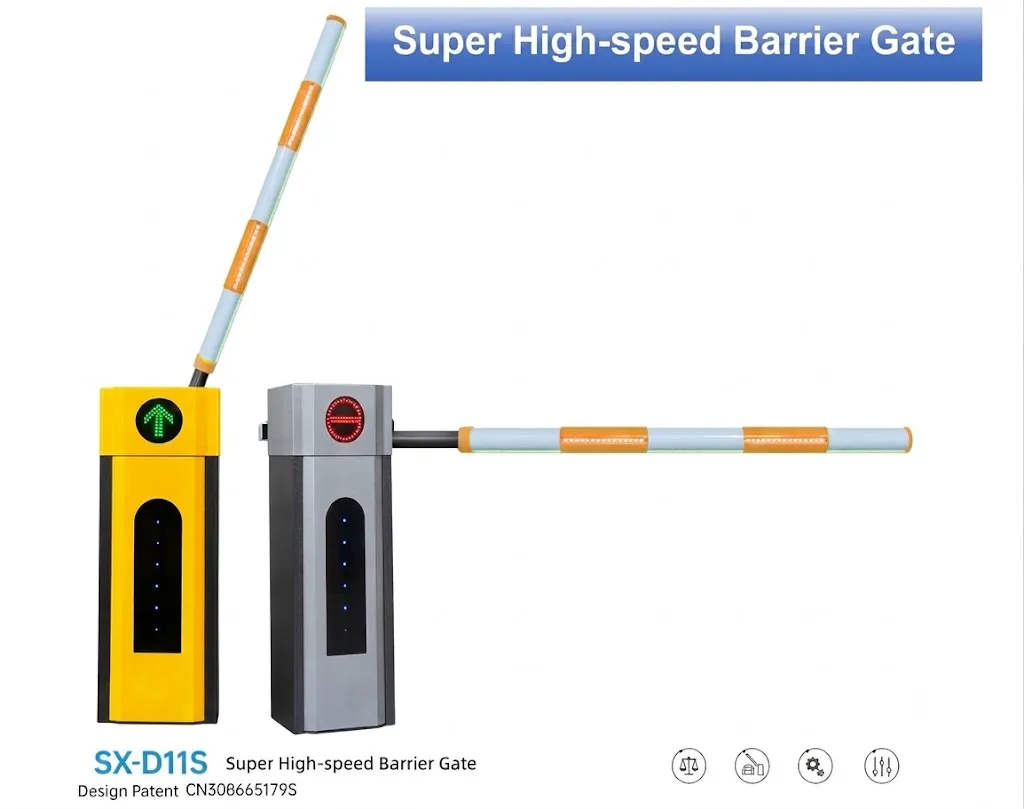
| Arm | Breakaway arm, commonly ten feet in toll-lane guidance, striped in two contrasting colors and reflectorized so it stays visible at night. | Three to six meters of straight or folding arm matched to the lane width. See our arm length guide. |
| Drive | Brushless DC or servo drives with controlled acceleration and battery backup; hydraulic and heavy-duty systems appear where vandalism or wind loading is severe. | AC or brushless DC. Compare both in our DC vs AC guide. |
| Detection | Inductive loop or radar at the lane exit plus a second presence check, wired to the gate or lane controller. | One loop or a photocell pair is usually enough. See our loop detector guide. |
| Signalling | Dry contacts, relay outputs, RS-485 or IP to the lane controller, payment machine or LPR system. | Remote control, keypad, RFID card or tag. |
Which US Standards Shape the Specification?
US projects mix product standards with project specifications. These are the items that come up in almost every toll-lane package:
- UL 325 — the safety standard for operators and systems that open and close gates and similar appliances. It is written around vehicular gates and explicitly includes barrier-arm operators, describing them as a cantilever arm moving in a vertical arc for vehicles at entrances and exits such as parking garages, lots or toll areas. Operators are classified Class I to Class IV by use, and the standard calls for both a primary and a secondary means of entrapment protection. Barrier arms that never come within about two feet of a fixed object and have no pinch points are treated differently from slide and swing gates, so the class and the site geometry matter.
- ASTM F2200 — the standard specification for automated vehicular gate construction. It covers the gate structures that get automated (slide, swing, vertical lift, vertical pivot, overhead pivot, bifold) and expects the gate to be automated with an operator that complies with UL 325. If the site also has a swing or slide gate, F2200 is part of the specification conversation too.
- FHWA tolling guidance — federal guidance for toll plaza barrier gates recommends a ten-foot gate arm on a breakaway assembly, a cabinet set back twelve inches from the face of the toll island, arm stripes in two distinct contrasting colors, and remote raise from the supervisor workstation where lanes are unattended. It also notes the trade-off: barrier gates slow traffic and add maintenance, so violation-enforcement (detection) equipment is preferred except where vehicle speed creates a hazard to staff crossing lanes.
- State DOT special specifications — where a state owns the plaza, its specification package rules. Published automated-barrier-gate specifications commonly call for single-phase 240 V 60 Hz supply, a motor rating in the region of half a horsepower, wind loading around 80 mph, aluminum or fiberglass arms with breakaway fittings, stainless or aluminum fasteners, and arms covered on both faces with alternating red and white reflectorized sheeting. Work from the current edition of the specification your client hands you.
- Electrical code, supply and funding — wiring, overcurrent protection and grounding follow the National Electrical Code (NFPA 70) and the local authority having jurisdiction, from the standard US 120/240 V single-phase 60 Hz supply; order the operator configured for the site voltage rather than adapting it on site. If the project uses federal financial assistance, domestic-content conditions such as Buy America may apply to foreign-sourced equipment — confirm with your client. Privately funded parking and campus lanes are normally outside those conditions.
What Should a Toll or Exit Lane Specification Include?
Send this list with the lane layout and you will get comparable quotations. Values are typical for this application.
| Item | Typical value | Why it matters |
| Lane width and arm length | Arm sized to the lane with a small end gap; ten feet is the toll-guidance arm length in US practice. | Too short a gap lets vehicles slip past; too long an arm slows the cycle and increases wind load. |
| Duty cycle and cycle rating | Continuous commercial duty; ask for the manufacturer's cycle rating and the basis on which it was measured. | A drive rated for a few hundred cycles a day will not survive a busy exit lane. |
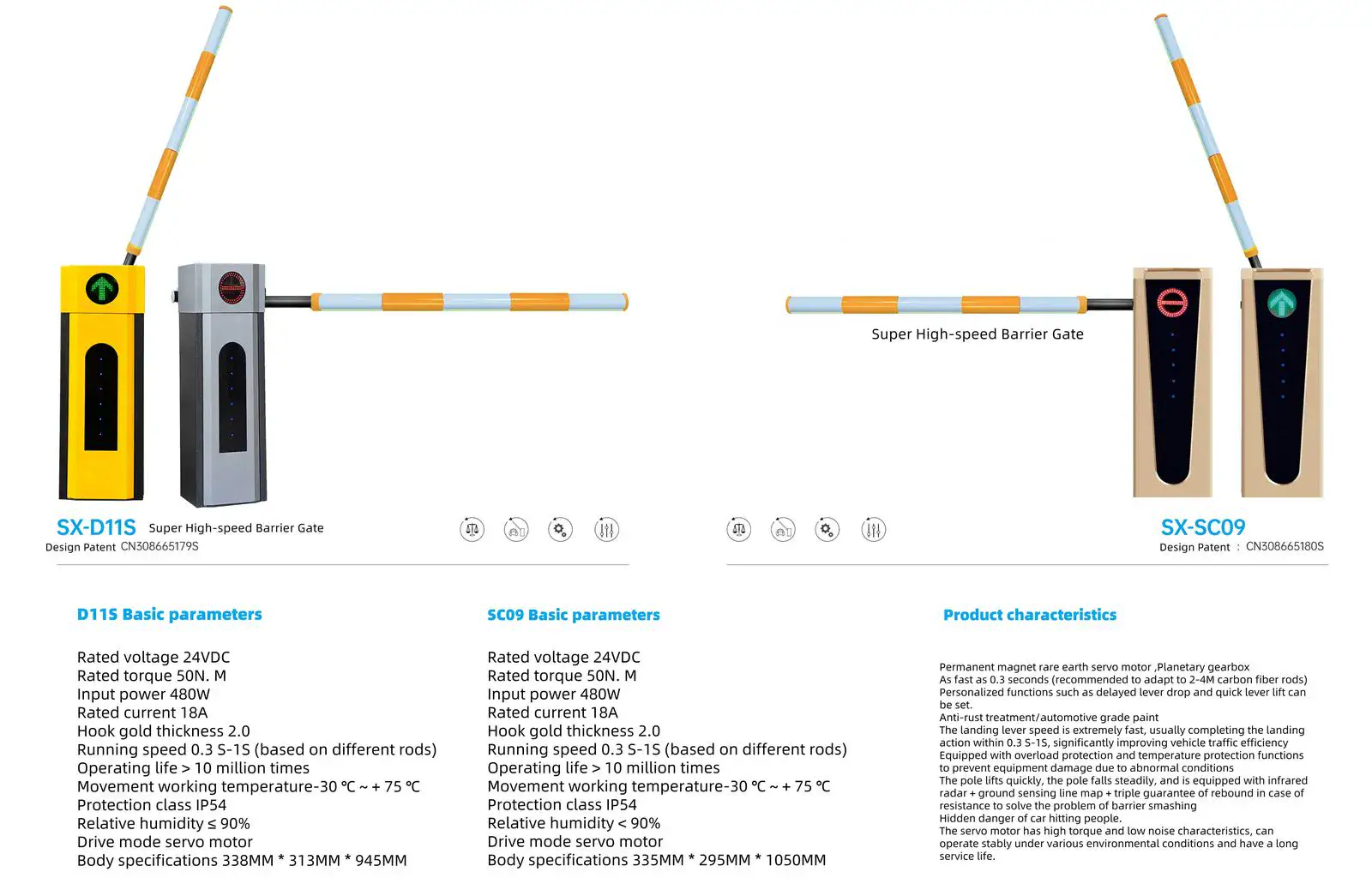
| Motor and controller | Brushless DC or servo drive, 120 V or 240 V single phase 60 Hz input, battery-backed. | Voltage and frequency must match the site; DC drives keep the lane usable during an outage. |
| Detection inputs | At least two: a presence loop or radar at the lane, plus a second check before lowering. | Stops the arm coming down on a vehicle or trailer that has not fully cleared. |
| Signalling to the lane controller | Dry contacts and relay outputs as a minimum; RS-485, Wiegand or IP where the payment or LPR system needs it. | The gate is one node in a lane system; incompatible signaling is the most common integration failure. |
| Safety provisions | Manual release, remote-raise input, warning signage, and monitored safety devices where entrapment zones exist. | UL 325 expects primary and secondary entrapment protection, and US sites are inspected on it. |
| Spare parts and documents | Wiring diagram, parameter list, spare-parts list, controller board and spring set with the first order. | A lane that waits weeks for a board is a lane that loses revenue. |
How Do Detection, Wiring and Payment Integration Fit Together?
Plan the lane as a system before you order the barrier:
- Approach detection — an inductive loop cut into the lane or radar on the cabinet tells the controller a vehicle is present.
- Transaction device — ticket machine, payment kiosk, QR validator, LPR camera or transponder reader authorizes the vehicle and releases the gate.
- Gate controller — drives the arm, monitors the safety devices and reports status back to the lane controller or supervisor station.
- Exit-side clearing — a second loop or sensor confirms the lane is clear before the arm lowers, which prevents the classic broken-arm incident.
- Supervision — remote raise from the booth plus a manual release for staff on foot, so a failed transaction never becomes a blocked lane.
If you are integrating LPR into the lane, read our LPR integration guide; if the site also sells parking time, the payment kiosk guide and safety sensors guide cover the parts most often forgotten in the first quotation.
How Do US Integrators and Operators Buy Factory-Direct?
- Write the specification, not a wish list — lane width, arm length, opening time, duty cycle, voltage, detection inputs, signaling type, environment and the exact equipment the lane must integrate with.
- Ask for documents with the quotation — datasheet, ISO 9001 certificate, test reports, wiring diagram and the model number you will actually receive. See our manufacturer selection guide.
- Confirm the safety classification — which UL 325 class the operator is intended for and what entrapment protection it provides. If UL-listed operators are required, settle that before production.
- Validate with one unit — benchmark the cycle, the controller settings and the spare-parts pack before committing to a project quantity. Single-unit and LCL shipments are normal in this trade.
- Choose the Incoterm deliberately — FOB or CIF if your own broker handles clearance, DDP if you want the supplier to deliver to site, with the importer of record agreed in writing.
- Plan duty and clearance — this equipment is commonly entered under the HS 8608 heading for traffic-control equipment for roads and parking facilities, and additional Section 301 tariffs may apply to Chinese-origin goods; classification and rates change, so your customs broker confirms them for your model and entry date, along with the customs bond and entry documents US Customs and Border Protection requires.
- Agree the after-sales package — warranty terms in the typical 12–24 month range, a spare-parts kit with the first order (controller board, springs, arm, remotes) and a named technical contact for commissioning questions.
Logistics are usually the easy part: production for standard models is typically measured in weeks, and ocean freight to a US port then runs roughly two to five weeks depending on coast and sailing schedule. What decides whether the project succeeds is whether the unit arrives configured for the lane, with the signaling the controller expects and the safety documentation the inspector asks for.

FAQ
Can I use a normal parking barrier gate in a toll lane?
Not for the main revenue lane. Toll and paid exit lanes need a drive rated for continuous duty, a fast cycle, breakaway arm fittings and a signaling path to the lane controller or payment device. A standard AC parking barrier may suit a low-volume staff lane, but it will not hold up as the primary lane.
Do barrier gates have to be UL 325 listed in the US?
Specifications, insurers and many authorities having jurisdiction ask for UL 325 compliance, and the standard covers barrier-arm operators explicitly. Entrapment protection requirements depend on the gate class and on how close the arm comes to fixed objects, so confirm the intended class and the documentation your supplier can provide.
What arm length should a toll lane use?
US tolling guidance recommends a ten-foot gate arm on a breakaway assembly for toll islands, because it closes most of the lane end gap without materially slowing the arm. For a parking exit lane, size the arm to the measured lane width — see our arm length guide.
How fast should a toll or exit lane gate open?
Toll-rated drives are typically specified in the range of about 0.6–1.5 s for a full cycle, with adjustable speed so the site can trade throughput against safety and mechanical wear. If the payment or LPR step already takes several seconds, a faster arm adds little to total throughput.
What happens when the power fails or the controller faults?
The lane has to keep clearing: a battery-backed drive, a manual release for staff, a remote-raise input from the booth and a status output the supervisor station can read. Write these into the order rather than adding them after commissioning.
Can I order toll or exit lane barrier gates factory-direct from China?
Yes, and it is common practice in this market. You get the same class of hardware — brushless DC or servo drives, breakaway arms, loop and radar inputs, dry-contact and serial signaling, battery backup — at factory level, provided you specify the voltage, the signaling and the documentation correctly. Pricing depends on the specification and is quoted on request; we do not publish list prices. See our price guide for cost drivers and the OEM guide for your own branding.
Conclusion
Toll lanes and paid exit lanes punish shortcuts. The gate that works is the one specified around the lane: the right drive class and duty rating, a breakaway arm of the right length, detection that confirms the lane is clear before the arm drops, signaling the lane controller understands, and a documented way to open the lane when something upstream fails. The standards tell you what to ask for — and state DOT specifications tell you exactly what a public plaza will accept.
Buying factory-direct shortens the supply chain but not the checklist. Send us the lane drawing, the voltage, the cycle expectations, the signaling type and the equipment the lane must integrate with — contact our engineering team and we will confirm the right model and a factory-direct quotation. Our crash-rated guide, truck lane guide and installation and maintenance guide cover the rest of the site.